
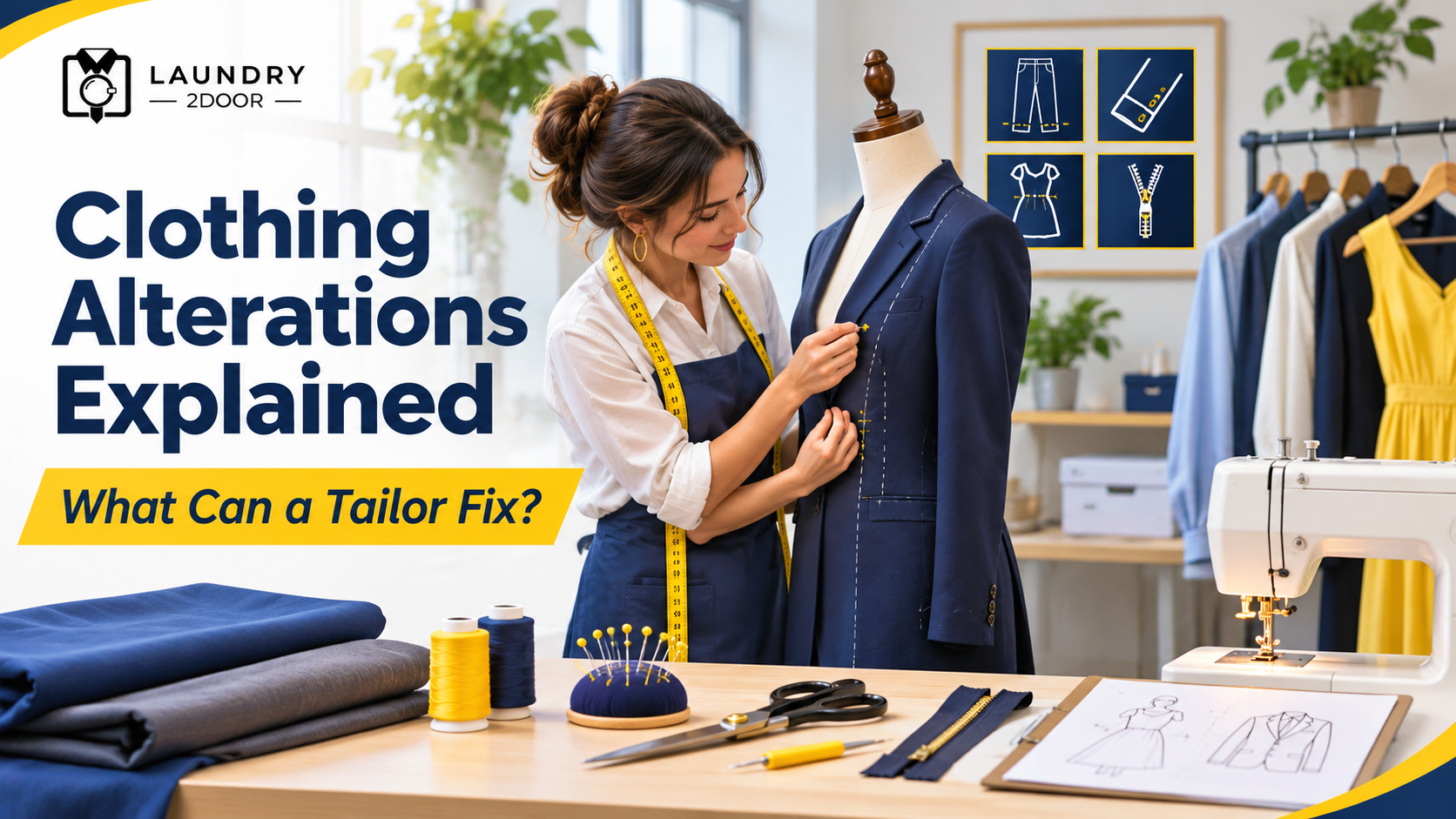
Have you ever tried on clothes that you hoped would fit perfectly but didn’t quite measure up? It could be that your pants are too long or your jacket is too large.
That doesn’t mean the clothes are bad.
Alterations can make clothes more comfortable and improve their appearance. Changes to the length or fit of a garment can allow it to lay better on your body.
But what can a tailor actually change? Can clothes be enlarged as well as made smaller? What is an acceptable price range for alterations in the UK?
This article will answer these questions and more.
What are Clothing Alterations?
These are changes made to a garment to improve its fit or appearance.
Rather than designing and producing a new item from scratch, a tailor modifies the clothes that you own.
Sleeve, waist and pant length are just a few of the areas of a garment that can be altered.
Why Replace Clothes When You Can Alter?
Alterations can allow off-the-rack clothing to fit better.
This reduces the need to buy new clothes and lessens your environmental impact.
Every time you buy new clothes, you’re supporting the fast fashion industry. Fast fashion is bad for the environment; why contribute to it when you don’t have to?
For instance, if the waist on a pair of pants fits well, but the length is too long, a tailor can shorten the length of the pants to the appropriate hem while keeping the original style.
A slightly loose dress can be taken in at the waist to make a better fit.
The construction and fabric of a garment will determine how much work is required for a particular alteration.
What is the Difference between Tailoring and Alterations?
There are similarities and differences between the two.
Tailoring can include creating clothing from start to finish, such as designing and constructing structural garments.
Alterations are changes made to already existing clothing.
A tailor can both create and change clothing.
Tailors have the skills to both alter and construct clothing.
Tailor vs. Seamstress
Both Tailors and Seamstresses have similar skills, including making alterations and doing repairs on clothing.
Tailors can do all types of alterations, but are mostly associated with structural clothing.
Sewists can alter everyday clothes like dresses and skirts, but may also have the skills to alter structural clothing.
The best choice will depend on the person’s experience with the type of clothing you want altered.
For example, if you need alterations on a bridal gown, suit or jacket that has leather accessories, find a person who has experience altering those types of clothing.
Can a Tailor Make Clothes Smaller or Bigger?
Can a tailor resize clothes?
Yes, in most cases, a tailor can resize clothes.
Making clothing smaller is generally easier than making clothing larger.
How to Adjust Clothing that is Too Large
With a garment that is too large, a tailor can remove excess fabric by adjusting seams.
For example, a loose shirt can be taken in at the sides. Trousers that are too wide can be taken in at the legs.
Prior to making any alterations, a tailor assesses how a garment fits. This includes the balance of the fabric with the body and other components of the garment.
Too much fabric can restrict movement. Therefore, a tailor must make adjustments so that a garment has a good fit and is balanced.
Can Clothing be Altered to be Larger?
It depends.
With a garment that is too small, a tailor can let seams out if the garment has excess fabric and the manufacturer left a fabric allowance.
If a fabric allowance isn’t present, then a tailor may not be able to alter.
Other cases may include adding panel fabric or lining to the seams. Not all garments provide a good fabric allowance for alterations to make larger size increases.
What Kind of Alterations can’t be Made?
There are some alterations that can’t be made.
These can include extensive resizing of heavy dresses and jackets that have no fabric allowance. Alterations on jackets that require a lot of structural changes to the shoulders can also be challenging.
The delicacy of some fabrics, including linings and leather, also complicates the process.
A tailor should first examine the garment to assess what is realistically possible.
Can a Tailor Repair Damaged Clothing?
Yes, a tailor can repair damaged clothing.
In addition to altering clothing to improve its fit, a tailor may also be able to perform repairs to increase a piece of clothing’s useful life.
However, repairs are not the same as alterations.
Alterations are changes to the fit of a piece of clothing, while repairs are changes to restore the integrity of the clothing.
Repairs to Clothing
Zips and Buttons
Zips can break, and buttons may fall off.
In some cases, a tailor may be able to replace the broken part.
If a zip is so damaged that the zipper teeth are completely separated, or the tape on which the zip is sewn is so damaged that the zip is no longer functional, then a complete zip replacement may be required.
The cost and complexity of a zip replacement would depend on the type of zip and the method used to attach it to the garment.
Seam Repairs
A garment may develop loose seams due to repeated wear or wash cycles.
In many cases, a tailor may be able to repair loose seams.
How easily a small hole can be repaired would also depend on the condition of the fabric.
If the fabric is too worn, new stitching may break or wear quickly, and the repair may not provide a long-term solution.
Coat and Jacket Repairs
Damaged seams, linings and broken zips are all problems that may occur with a coat or jacket, and that may require repair.
Some of the repairs may be simple, while others may require special equipment.
Leather and other delicate materials may require specific experience to work with.
Find out if the tailor is comfortable with that type of repair before you have them send it out.
Repairs vs. Alterations: What’s the Difference?
The difference is in the purpose of the work.
Repairing a garment is restoring a damaged part of the garment.
Altering a garment is changing the fit of a garment.
For example, replacing a broken zipper on a pair of trousers is a repair and shortening the length of the trousers is an alteration.
Some services provide both, but check before you book.
Dress, Suit and Trouser Alterations: What Can Be Changed?
Not all alterations can be made to all kinds of garments.
Knowing the most common alterations can help explain what kind of alterations you are looking for.
Common Dress Alterations
A tailor can shorten the length of a dress and adjust the waist and straps.
A tailor can also improve the fit around the upper body of a dress.
A cotton sheath dress can be adjusted to be fitted better than a beaded and embellished evening gown.
A tailor can make the following alterations to suits.
Suit Alterations for a Better Fit
- Shortening and taking in the trouser legs
- Slackening the chest and shoulder area of the jacket
Trouser Alterations and Hemming Options
- Tapering of the legs
- Shortening the length of the trousers
- Adjusting the waistband
The style determines the type of hem.
Formal trousers may require a different type of hem from chinos or jeans.
A good tailor will notice how the trousers fall over the shoes and if the adjustment will affect the silhouette.
Shirt and Jeans Alterations
Shirts can be taken in and the length of the sleeves adjusted.
Jeans can be hemmed or tapered.
If the jeans are being significantly resized, the pockets may no longer be in the right place.
Discussing the goal before anything is cut will help ensure the best result.
How Long Will It Take to Get My Alterations?
The time it takes is determined by the work and the tailor’s schedule.
Simple alterations will take less time than more complicated ones.
Make sure to confirm the expected completion date before scheduling.
Simple Changes versus Complex Changes
Shortening plain trousers is generally a simple change.
Alterations to a suit jacket or a complex dress may require changes that must be verified during a fitting.
What Can Impact the Time it Takes to Get My Alterations?
If there are a lot of clothes to be altered at once, and/or many fittings are necessary, it may take longer.
Tailors are often very busy leading up to a wedding or other formal event.
If you need an alteration done by a specific date, let them know when you ask for a quote.
Is it Easy to Find Someone Who Can Make Same-Day Alterations?
Tailors can often do simple alterations on the same day.
While availability varies, some forms of work can be requested at short notice.
For example, formal wear alterations and some repairs require lead time.
Never assume an urgent alteration can be done without checking with the provider directly.
How to Get Clothes Altered by a Professional Tailor
If you’ve never arranged for clothing alterations, the process is usually simple. The hardest part is communicating to the professional what kind of fit you are looking for.
Finding the Right Tailor or Alteration Service
Look for the professional with the right kind of experience for the type of clothing you want altered.
A tailor who alters a lot of men’s suits may not have the same kind of experience as a tailor who does bridal alterations.
When choosing a service, consider how long they have been doing this, their prices, reviews, and whether they come to you for fittings.
What Happens During a Clothing Fitting?
The tailor inspects how the garment sits on your body, determines where it needs to be adjusted, and may mark or pin areas to be altered.
There may also be an opportunity to express how you’d like it to fit differently (tighter, looser, shorter, longer, etc.).
What to Bring to Your Alterations Appointment
Bring the garment and any accessories that change how it fits. For pants, also wear the shoes you plan to wear with them.
Measurements for dresses may vary depending on the shoes and undergarments worn.
Explaining when you need the garment can also be useful (e.g. ‘by Thursday’ to request more expedient service, ‘this weekend’ to indicate a need for after-hours service, etc.)
It is also useful to indicate if you have a style in mind, to help answer the question “Do you want this…?”
Do-It-Yourself (DIY) Clothing Alterations vs. Professional Tailoring
Not all clothing adjustments require a trip to a tailor.
A simple hem or minor seam repair could be completed at home with some practice and the right tools.
While these may be simple adjustments, not all alterations are appropriate for the novice.
Examples of Clothing Adjustments Suitable for a Novice
Basic sewing repairs or adjustments could include replacing a button or a simple hem.
Beginners may want to practice sewing repairs on lower-quality fabrics before attempting adjustments on higher-quality or more expensive fabrics.
While there are many DIY solutions for temporary hem adjustments for clothing, not all solutions work for all clothing types.
When Should a DIY Alteration be Avoided?
A DIY alteration can be attempted for most clothing types, but not all.
In the case of a structured suit or expensive dress, a DIY alteration may not be the best idea.
To adjust a seam to alter the size of a garment may be best left to a professional.
Benefits of Professional Tailoring
One benefit of professional tailoring is the assurance of a knowledgeable professional who can identify appropriate alterations for a garment based on the construction of the clothing.
Another benefit of tailoring may be the avoidance of problems like restricted movement, distorted seams or uneven hems.
Though tailoring comes at an additional cost, it may be helpful to maintain the use of other clothing in your wardrobe.
How to Care for Clothes After Alterations
After spending money to have clothes altered, you probably want those clothes to look good for as long as possible. The care and maintenance of altered clothes varies by fabric and construction, so to keep your altered clothes looking sharp, you have to do some research.
Washing & Drying Altered Clothes
Usually, after alterations, you have to continue following the instructions on the care label, unless your tailor has given you new instructions. Sometimes with delicate fabrics, the instructions on the care label may suggest washing at temperatures that are too hot for the fabric to endure.
In such cases, it’s best to just hand wash the clothing.
If you plan on using a professional laundry service, you may want to check and see if they use a method that respects the construction of your altered clothes.
Dry Cleaning
It’s best to have more structured clothes (like suits and formal dresses) and more delicate fabrics dry-cleaned.
Check the label before washing.
If clothing is marked dry-clean-only, you should never attempt to wash it yourself.
Laundry2Door offers a professional dry-cleaning service if you want to use a service that you know will respect the construction of the clothes.
Storing Altered Clothes
When storing altered clothes, try to support the structure of the clothes so creases and stretching don’t occur. With jackets and pants, use a hanger that supports the structure of the clothes.
With knitwear that is more bulky, it’s best to fold the clothes instead of leaving them hanging for a long time.
Make sure the clothes are completely dry before storing.
See our other article for more tips on storing clothes.
Some Frequently Asked Questions About Clothing Alterations
What is Clothing Alteration?
Clothing alterations are changes made to an already existing piece of clothing to suit one’s preferences. This could be change in shape or length. Examples of this could be shortening pants, taking in the waist, changing sleeve length, and dress alterations, among others.
What Kind of Alterations can a Tailor do?
A tailor is usually able to do various alterations. These could be hemming, taking in or letting out the waist, shortening sleeves, resizing a shirt, among others. Some tailors can also do alterations to suits and dresses, as well as zip replacement and seam repairs.
Can a Tailor make Clothing Smaller?
Yes. This is quite common. Various seams can be taken in or excess fabric removed. Examples of this can be taking in a waistband or altering a shirt to be narrower. A large alteration can change the proportions of the piece.
Can a Tailor make Clothing Bigger?
This can be possible if the piece has enough ease to let out seams or more fabric to add.
Can a Tailor do Clothing Repair?
Yes, various tailors can also do clothing repair. This can be as minor as zip replacement or small seam repairs to major repairs such as tearing or seam separation.
Can be made to measure
When an item of clothing almost fits, but needs slight alterations to make it comfortable, clothing alterations can make a big difference.
Clothes that you already own can be altered to fit you better.
It’s important to understand your limits. Some alterations are easy, but others can depend on the construction of a garment and the fabric available.
Be sure to explain what you want changed beforehand, and ask about any constraints.
Once your clothes fit, the next concern is keeping them that way.
Caring for your clothes is very important.
Laundry2Door is a dry cleaning and laundry service operating in West London. We pick up and drop off your dry cleaning and laundry in supported areas of Uxbridge, Ruislip and Ickenham.
Our laundry and dry cleaning services can help ensure your clothes are ready for wear or storage.
Check out our services to see how we can help maintain your wardrobe.