

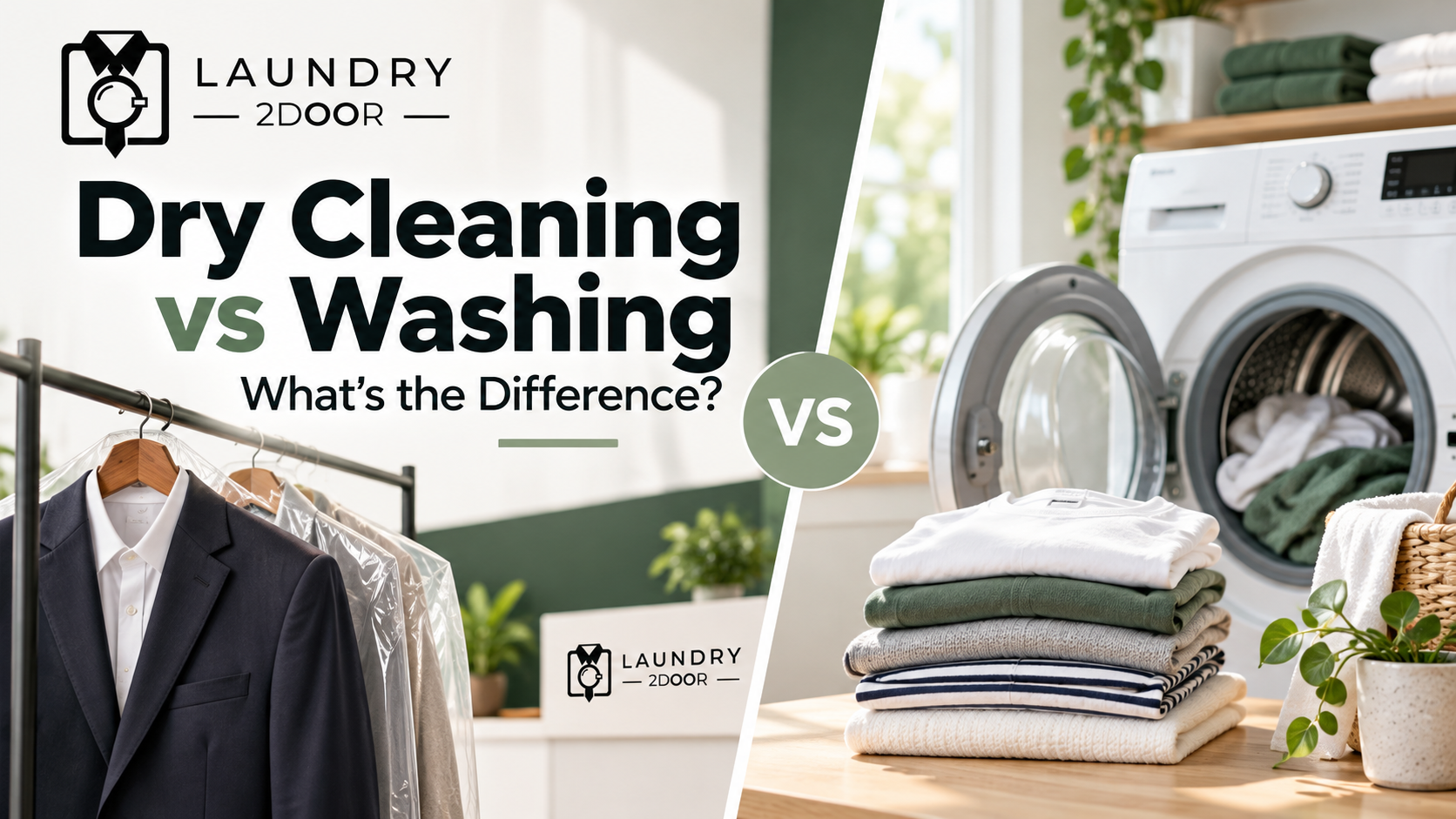
You wear your favorite blazer to a family dinner and end up with a food stain on the sleeve. The thought of putting it in the washer crosses your mind, but the label says “Dry Clean Only.” You wonder if the stain is bad enough to warrant the cost of taking it to the dry cleaners.
When it comes to stains, you can usually get away with washing delicate clothes, as long as you pay attention to the care label.
In the course of daily life, you will often find yourself with a decision of ‘dry clean vs. wash.’ Let’s look at the basic principles of each of these methods.
What Is the Difference Between Dry Cleaning and Washing?
In a basic sense, both dry cleaning and washing are methods of removing dirt and stains from clothes. The big difference between the two is the type of liquid used. Washing uses water and detergent. Dry cleaning, on the other hand, uses special liquid solvents. Dry cleaning is often better for clothes that could be damaged if put in a normal wash.
So, which method should you go for? The answer to this really depends on the fabric and construction of the clothes.
Washing machines use water and detergent to break down dirt and grime. The movement of the machine helps loosen dirt. Once the dirt is broken down, it is rinsed away with water.
Dry cleaning works a little differently. Instead of using water and detergent to break down the dirt, dry cleaning uses a special type of solvent. This can be beneficial to fabrics that are not as tolerant to normal washing.
Cotton T-shirts can take a normal washing. However, a wool suit can lose the shape of its shoulders and linings if washed, as it contains numerous inner layers and pad stitchings.
It is important to use the correct method to clean clothing so that the inner layers, shapes and details of a suit are maintained.
Dry Cleaning vs Washing: Quick Comparison
- Method
- Specialist liquid solvent
- Water and detergent
- Price
- More expensive per item
- Cheaper
What Are The Advantages of Dry Cleaning?
Both dry cleaning and normal washing have their pros and cons. Therefore it is important to use the correct method for the particular fabric to ensure details of a suit are maintained.
Professional dry cleaners use specialized solvents to clean your clothes. These solvents are designed to remove stains and dirt of various kinds.
This method is ideal for clothes made of materials which can shrink, distort or lose their finish with conventional washing.
Benefits of Professional Dry Cleaning
Dry cleaning is ideal for clothes that can’t be machine washed. Dry cleaning has many advantages including:
- Preserving the shape of your tailored garments
- Decreasing the risk of shrinkage caused by water
- Removing oil stains
- Providing protection and cleaning for fragile and delicate clothes
Of course, not all your clothes require dry cleaning. A cotton T-shirt doesn’t become cleaner because you had it dry cleaned. The material and care labels give you the information you need.
How Does Regular Washing Work?
Regular washing works for most of the clothes we wear daily.
Washing clothes can get rid of the dirt, stains and residues we get throughout the day. It’s practical, affordable, and quicker than taking clothes to be dry cleaned.
A washing machine can clean your clothes with detergent in water and mechanical movement. Afterward, the machine rinses the clothes with water, and then spins the clothes to take out the excess water.
Although washing clothes is practical and quick, the types of fabrics can dictate the type of washing and the temperatures of the washes.
Putting everything on the same program can save time but is not always right for your clothes.
Machine Washing vs Hand Washing
If you want to save time and don’t need your clothes to be super clean, machine washing is the better option.
Shirts, socks and towels are just a few fabrics that are fine to be machine washed.
Some shirts may say hand wash. This means that the shirt may need a more delicate wash, like hand washing.
Regular machine washing isn’t recommended for a lot of clothes. Things like delicate knits can’t stand the harsh movements of a standard machine program.
Being dry cleaned doesn’t automatically mean a piece of clothing is safe to hand wash. Many materials can still shrink or lose their shape from contact with water.
Fabric care labels have valuable information for cleaning, but a lot of labels aren’t in English.
What Is Professional Wet Cleaning?
Professional wet cleaning is just one of the other methods of cleaning that some cleaners offer in addition to dry cleaning.
Wet cleaning uses water and specific detergents to clean clothes instead of the chemical solvents used in traditional dry cleaning.
Like dry cleaning, there’s special equipment used to control the process.
Wet cleaning is recommended for some clothes that require special care.
Not all cleaners offer this service, so check for yourself what’s offered by each cleaner.
Is Dry Cleaning Better Than Washing?
Not necessarily.
If you have a cashmere sweater or a wool coat that’s really heavy and bulky, dry cleaning is probably the better option. But if it’s a regular bedsheet or T-shirt, it’s better to just throw it in the washer.
The condition of the fabric also matters. A suit jacket stained with salsa probably shouldn’t be washed at home like your other regular clothes.
Which is Better for Removing Stains?
Treating stains depends on a variety of factors.
Oil-based stains, like grease and some cosmetics, may be removed using solvents in dry cleaning.
Stains caused by water can be removed using a water-based wash. Salts and food stains are often removed this way.
Stain removal is not always that simple, however.
A stain that has sat on a garment for several weeks can be harder to remove than a fresh stain.
Like with food stains, some stains can set in from heat and make the stain almost impossible to remove.
It is helpful for a dry cleaner to know what caused the stain. Knowing the cause of the stain may help the cleaner select an appropriate solvent for stain removal.
Complete stain removal cannot be guaranteed through either dry cleaning or regular washing.
Does Dry Cleaning Shrink Clothes?
Dry cleaning can help prevent water-related shrinkage, but other forms of damage may still occur.
Some fabrics and dyes may not be stable enough to be cleaned using a particular solvent.
Machine washing may cause shrinkage, but not always.
Some fabrics can be cleaned using the correct conditions, and may help prevent shrinkage and loss of shape.
Which is Better for Fabric Care?
Dry cleaning may be better for structured fabrics, and washable, sensitive fabrics may require a gentler water-based program.
Garment construction is critical.
A jacket, for example, has an inner layer (which is often different from the outer layer) and an inner lining.
Because of this, care labels are usually a good starting point for determining the best way to wash a particular article of clothing.
Which Clothes Should Be Dry Cleaned Instead Of Washed?
Not all clothes need to be dry-cleaned.
Dry-cleaning clothes has some benefits, and for certain items, it’s the best way to clean them.
For example, a fitted suit needs to be dry-cleaned, as the structure of the suit may change if it is washed.
Dry Cleaning vs Washing for Wool and Silk
Most people tend to group wool and silk items together and assume they need to be dry-cleaned, but there are exceptions.
Some wool jumpers are ok to hand wash. Others, like a structured wool coat or suit, probably need to be professionally cleaned.
Silk can also be treated in different ways. For example, a silk scarf may be ok to hand wash, whereas a silk suit probably needs to be professionally cleaned.
Some silk pieces can be washed, but others contain dyes or constructions that can’t stand up to washing.
You should always follow the instructions on the garment before using any guesswork based on the fibers.
What Clothes Can be Machine Washed?
Nearly all of your everyday clothes can be washed regularly. These include:
- Cotton t-shirts
- Socks and underwear
- Most shirts
- Casual trousers and jeans
- Washable sportswear
- Polyester clothes
- Everyday bedding and towels
Even with these items it is best to separate colors, check washing temperatures and follow the care instructions.
A professional laundry service can be a good option if you can’t keep up with the volume of laundry you need to do.
Is Washing or Dry Cleaning Cheaper?
Washing is almost always going to be cheaper than dry cleaning.
However, washing can be costly if you damage an expensive item.
What Determines Dry Cleaning Prices?
Dry cleaning prices vary based on the item being cleaned. For example, a pair of trousers would cost less to dry clean than a heavy coat.
Prices vary based on:
- Garment type and size
- Fabric and construction
- Stain treatment requirements
- Special finishing and pressing
- Cleaning method required
- Collection and delivery
Different prices between cleaning providers and locations can also occur.
Prices can vary, especially for specialty garments. It’s advisable to ask for a quote, or check the price list.
How to Choose the Right Cleaning Method for Your Clothes
Not all garments are created equal. When in doubt, remember these rules:
- Check care labels if present.
- Consider fabric type and stains.
- Consider the entire construction of the garment including:
- linings
- interfacings
- buttons and trims
- pleats
- special finishes
- Dirt and stains.
Be extra careful with items with significant sentimental or financial value.
Professional Dry Cleaning and Laundry Services in West London
There are circumstances when washing your own clothes is the best and most cost-efficient option.
But when household laundry, work clothes and other delicate garments start piling up, it can feel like an extra chore on an already long to do list.
LINEN2DOOR’s clients in selected West London areas can book their laundry and dry cleaning services, including collection and delivery.
Collection and Delivery of Laundry
Most people can manage to wash their everyday clothes at home. However, some items of clothing need professional washing and dry cleaning. For example, suits and other clothes worn for work or special occasions.
A collection and delivery service can be a big time saver if you have lots of clothes to clean, or if you have a hectic schedule.
Reason to Choose Laundry2Door
Customers can choose between a professional laundry and dry cleaning service. This means they can select the most appropriate service based on the care instructions of the clothes they need to have washed and dried cleaned.
The same applies for washable, everyday clothes or professional dry-clean only clothes. People can check what services are available and what times they can be collected.
For items of clothing that need specialist dry cleaning, or are delicate, you should check what type of cleaning is best.
Is Dry Cleaning Suitable for Delicate Fabrics?
The majority of delicate fabrics can be dry cleaned, however, there are solvents that are more harmful than others and could damage delicate fabrics and finishes. There are solvents that aren’t as harmful and can be used on more fabrics. Professional cleaners should always check the care label of the fabric to see the type of cleaning to be done on that fabric. They should also check the construction of the fabric to see if there are any delicate trims or beadings.
Dry Cleaning or Washing – Which Should You Choose?
It’s always best to follow the instructions of the care label to understand the appropriate method of cleaning for your clothes.
If the care label says something like “Do Not Tumble Dry” then you shouldn’t tumble dry clean that fabric.
In general, you should wash everyday clothes and dry clean more tailored clothes. This is because the tailored clothes are made from nicer, more delicate fabric.
If you have any questions or concerns, it’s always best to contact a professional to help you understand the correct method of cleaning for a fabric, instead of losing the shape of a fabric that is difficult to replace.
Laundry2Door provides convenient and professional dry cleaning and laundry services. See our laundry or dry cleaning services to make the right choice for your fabrics.